
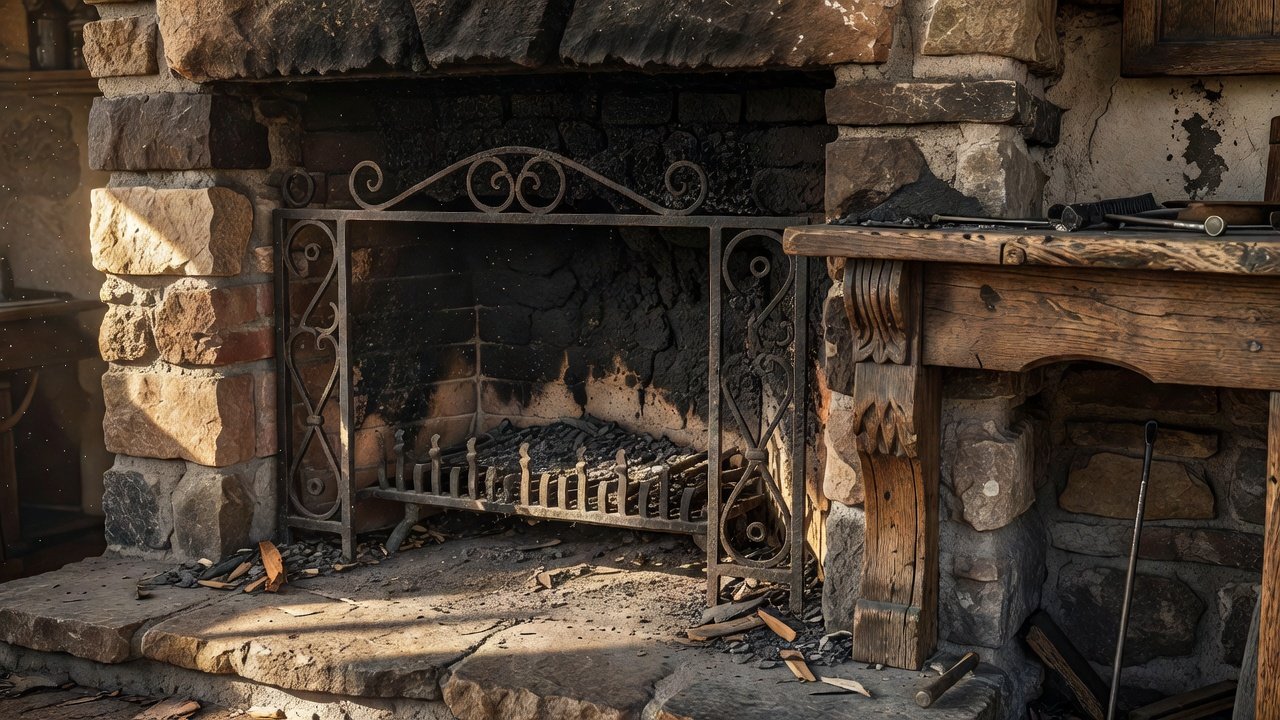
What Your Chimney Is Trying to Tell You Before It Becomes a Fire Hazard
Most chimneys in Irvington give clear warning signs before they fail.
The problem is that those warnings often seem minor a smoky smell in February, a stain on the ceiling above the fireplace, or a damper that suddenly requires more effort to open than it used to.
Many homeowners assume it’s simply an old house showing its age.
Then a chimney fire occurs, or carbon monoxide begins leaking into the living space, and what once seemed like a small annoyance becomes a serious safety issue.
This guide explains six of the most common chimney problems our technicians find in Irvington and neighboring Essex County communities including Newark, East Orange, Montclair, Bloomfield, and Maplewood what those problems actually mean, and how a CSIA-certified chimney professional repairs them.
Creosote Buildup That’s Beyond a Standard Cleaning
What You May Notice
- A strong, tar-like odor while the fireplace is in use.
- Fires that burn sluggishly or draft poorly.
- Black, flaky deposits visible inside the flue.
What’s Actually Happening
Every wood fire produces creosote.
Creosote develops in three stages.
Stage One is light and flaky and can usually be removed during a routine chimney sweeping.
Stage Two becomes sticky and tar-like, requiring specialized rotary cleaning equipment.
Stage Three forms a hard, glazed coating that is highly combustible and can ignite at temperatures exceeding 2,000°F.
According to NFPA 211, chimney cleaning should be performed whenever creosote deposits exceed approximately 1/8 inch.
Many older Irvington homes particularly Victorian and Colonial properties along Lyons Avenue have accumulated Stage Two or Stage Three creosote after years without professional maintenance.
The Professional Solution
A CSIA-certified chimney sweep first determines the stage of creosote before beginning any cleaning.
- Stage One generally requires standard chimney brushing.
- Stage Two often requires rotary cleaning equipment and, in some cases, specialized chemical treatments.
- Stage Three frequently requires chemical treatment followed by additional cleaning and a camera inspection to verify the flue liner hasn’t been damaged by excessive heat.
This isn’t a safe DIY project.
Can It Be Prevented?
Yes.
Annual chimney sweeping helps prevent creosote from progressing beyond Stage One.
A Cracked or Deteriorated Flue Liner
What You May Notice
- A smoky odor lingering long after the fire has gone out.
- Soot collecting around the fireplace opening.
- White staining or cracking on the exterior chimney.
What’s Actually Happening
The chimney liner separates dangerous combustion gases from your home’s framing.
Many clay tile liners installed before 1980 develop cracks after decades of repeated heating and cooling cycles.
Even a single crack can allow heat and carbon monoxide to escape into concealed wall cavities.
According to NFPA 211, damaged flue liners should be repaired before the fireplace is used again.
The Professional Solution
Diagnosing liner damage requires a Level II chimney inspection using specialized camera equipment.
Minor defects may sometimes be repaired using cast-in-place liner systems.
More extensive deterioration typically requires installing a properly sized stainless steel chimney liner.
Can It Be Prevented?
Regular inspections help identify small cracks before they become major failures.
Burning properly seasoned hardwood also reduces thermal stress on clay liners.
A Blocked or Restricted Chimney Flue
What You May Notice
- Smoke entering the room.
- Poor fireplace draft.
- Birds or animal noises inside the chimney.
What’s Actually Happening
Older chimneys without properly fitted caps frequently collect leaves, nesting materials, broken masonry, and animal debris.
Partial blockages restrict airflow and increase the risk of carbon monoxide entering the home.
Bird nesting is especially common throughout Irvington, Newark, and East Orange.
It’s important to remember that chimney swifts are federally protected, meaning active nests cannot legally be removed during nesting season.
The Professional Solution
A chimney technician safely removes blockages, verifies proper draft, and installs a stainless steel chimney cap with protective screening if one isn’t already present.
If chimney swifts are actively nesting, the technician will explain the legal requirements and schedule follow-up work after migration.
Can It Be Prevented?
Yes.
A properly installed chimney cap prevents most debris and animal-related blockages.
Spalling Brick and Deteriorating Mortar
What You May Notice
- Loose brick fragments around the chimney.
- Missing or cracked mortar joints.
- Water stains near the fireplace or chimney.
What’s Actually Happening
New Jersey’s repeated freeze-thaw cycles are particularly hard on masonry.
Moisture enters small cracks, freezes, expands, and gradually breaks apart both the mortar and surrounding brick.
Once the mortar begins failing, water penetrates deeper into the chimney structure, accelerating deterioration and eventually affecting flashing, the chimney crown, and surrounding framing.
The Professional Solution
Repairs often include:
- Masonry tuckpointing
- Chimney crown repair or replacement
- Flashing repair
- Professional waterproofing
The exact scope depends on the extent of the deterioration.
Can It Be Prevented?
Routine exterior inspections every few years allow small mortar repairs to be completed before major structural work becomes necessary.
A Damaged or Stuck Chimney Damper
What You May Notice
- Cold drafts entering the home.
- A damper that’s difficult to open or close.
- A damper that no longer seals properly.
What’s Actually Happening
Traditional cast-iron throat dampers naturally corrode over time.
A damper that doesn’t close tightly wastes heated air.
A damper that won’t fully open can interfere with chimney draft and increase the risk of combustion gases entering the home.
Some older Irvington homes no longer have a functional damper at all.
The Professional Solution
Depending on the condition, technicians may repair or replace the existing throat damper.
Many homeowners choose to upgrade to a stainless steel top-mounted damper, which provides a tighter seal while also serving as a chimney cap and animal guard.
Can It Be Prevented?
Routine lubrication and annual inspections help extend damper life, but most cast-iron dampers eventually require replacement after decades of use.
Firebox Damage and Refractory Panel Failure
What You May Notice
- Cracks inside the firebox.
- Loose or deteriorating firebrick.
- Broken refractory panels in factory-built fireplaces.
What’s Actually Happening
The firebox is designed to withstand extremely high temperatures.
When refractory mortar, firebrick, or factory-built fireplace panels crack, heat can transfer into nearby combustible framing.
Many zero-clearance fireplaces installed between the mid-1970s and mid-1990s eventually develop cracked refractory panels from repeated heating cycles.
The Professional Solution
Small firebrick cracks may be repaired with refractory mortar.
Damaged refractory panels generally require complete replacement using manufacturer-approved parts.
Factory-built fireplaces often require model-specific replacement components to maintain safe operation.
Can It Be Prevented?
Burning appropriately sized fires and avoiding trash, painted wood, or pressure-treated lumber significantly reduces unnecessary heat stress.
Schedule Your Chimney Inspection in Irvington
Every issue described above can usually be identified during a Level I or Level II chimney inspection, and nearly all of them are far less expensive to address when caught early.
If your fireplace hasn’t been professionally inspected within the past year or if you’ve noticed any of these warning signs don’t wait until a small problem becomes a major safety concern.
Irvington Chimney Sweep proudly serves homeowners throughout Irvington, Newark, East Orange, Bloomfield, Montclair, Maplewood, and surrounding Essex County communities.
Schedule your free chimney inspection today. Our CSIA-certified technicians will evaluate your chimney, explain exactly what they find, and provide honest recommendations with clear written estimates no pressure and no unnecessary repairs.
Also on this site: Your Wood-Burning Fireplace Is Telling You Something — Are You Listeni
Also on this site: Your Harrison Chimney Is Telling You It Needs Creosote Removal — Here’
Areas we serve
Irvington, NJ · Irvington, NJ · Irvington, NJ · Irvington, NJ · Irvington, NJ